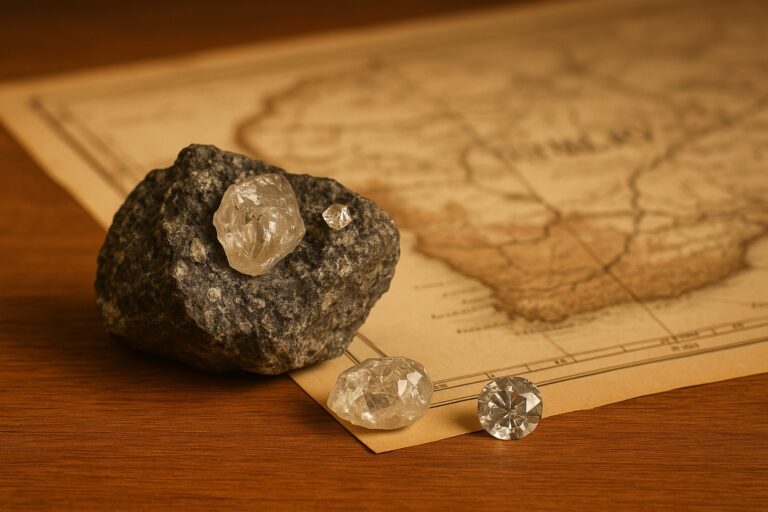
For centuries, natural diamonds have fascinated humanity not only for their brilliance but for the remarkable journey they take before reaching a jeweller’s bench. Long before they adorn engagement rings or museum displays, diamonds exist as ancient geological relics, forged under extraordinary conditions deep within the Earth. Understanding how diamonds were formed means looking back billions of years into the planet’s early history — long before continents settled into their current shapes. For visitors and clients at the Museum of Gems & Jewellery, this scientific story is as captivating as the gems themselves.
The Birthplace of Diamonds: Deep Within the Mantle
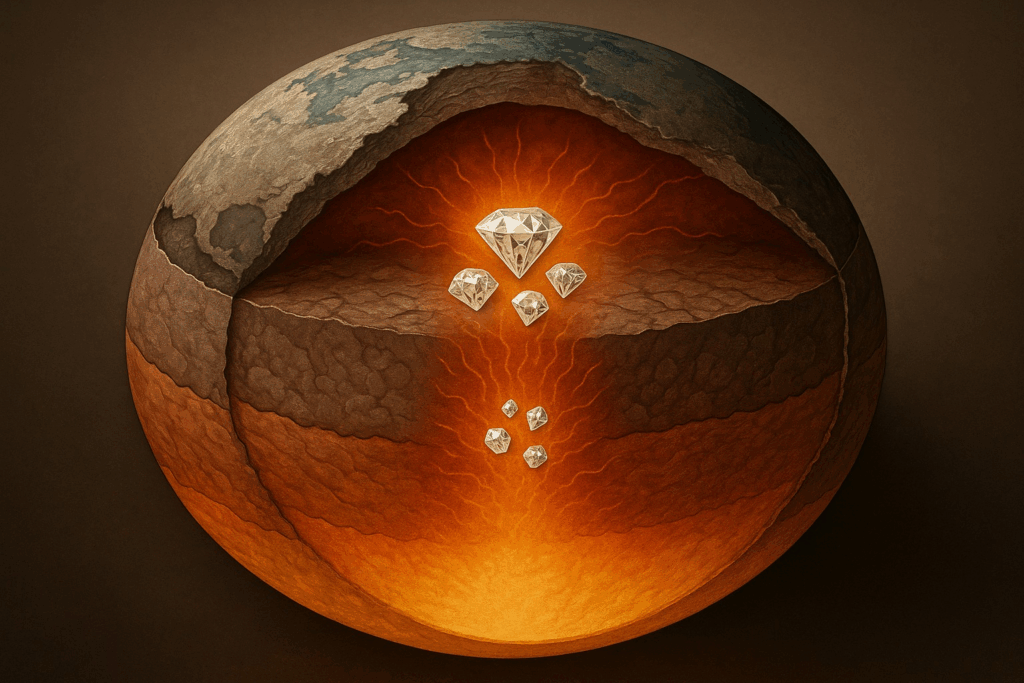
Most natural diamonds found in Southern Africa formed between 3.3 and 1 billion years ago, deep in the Earth’s mantle at depths of 140–200 kilometres. At these depths, conditions are extreme. Temperatures reach more than 1 000°C, while pressures exceed 45–60 kilobars — far beyond anything achievable on the Earth’s surface.
Under this intense environment, carbon atoms arranged themselves into a rigid crystal lattice known as the diamond cubic structure. This tightly bonded arrangement is what gives diamonds their exceptional hardness. While carbon is one of the Earth’s most abundant elements, the specific combination of pressure, heat, and time required to create a diamond is extraordinarily rare.
Carbon: The Foundation of Diamond Formation

All diamonds are crystallised carbon. However, the origin of this carbon can vary. In some cases, it comes from primordial carbon trapped within the Earth during its early formation. In others, it may originate from ancient organic material that was subducted deep into the mantle through tectonic processes. Regardless of origin, the transformation into diamond requires conditions that no longer exist on Earth today.
Once formed, diamonds remained locked within the mantle for millions — and often billions — of years. Their growth was not continuous. Periods of heating, pressure changes, and mineral-rich fluids influenced their crystal development. Inclusions found within natural diamonds are evidence of this complex growth history and allow gemmologists to study geological processes that occurred long before human existence.
Volcanic Highways: Kimberlite and Lamproite Eruptions
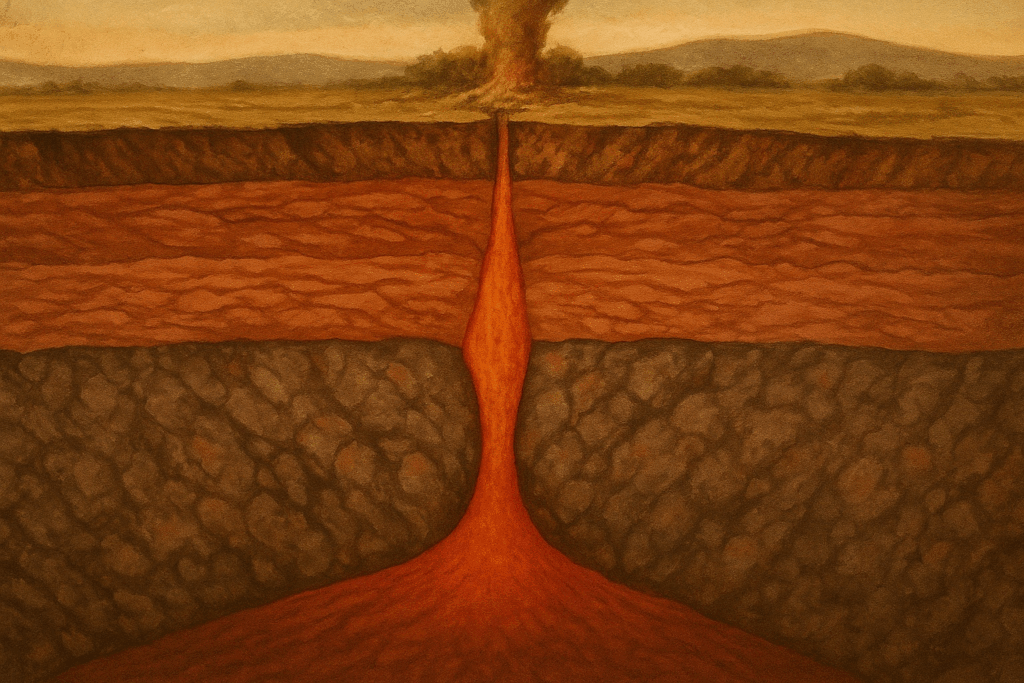
Diamonds could not reach the Earth’s surface without a powerful natural mechanism. This came in the form of deep-source volcanic eruptions that created kimberlite and, less commonly, lamproite pipes. These eruptions were rare, extremely rapid, and violent, drilling channels from the mantle to the surface in a matter of hours.
As these molten magmas rose, they captured diamonds embedded in mantle rock and carried them upwards. The speed of the eruption was critical. If the ascent was too slow, diamonds would revert to graphite — a softer carbon form. Only the fastest eruptions preserved diamonds in their original structure.
Kimberlite pipes are now some of the world’s most important sources of natural diamonds. South Africa hosts several significant pipes, including those in Kimberley and Cullinan, which have shaped both the global diamond industry and our understanding of deep-Earth geology.
The Structure of a Diamond: Order at the Atomic Level
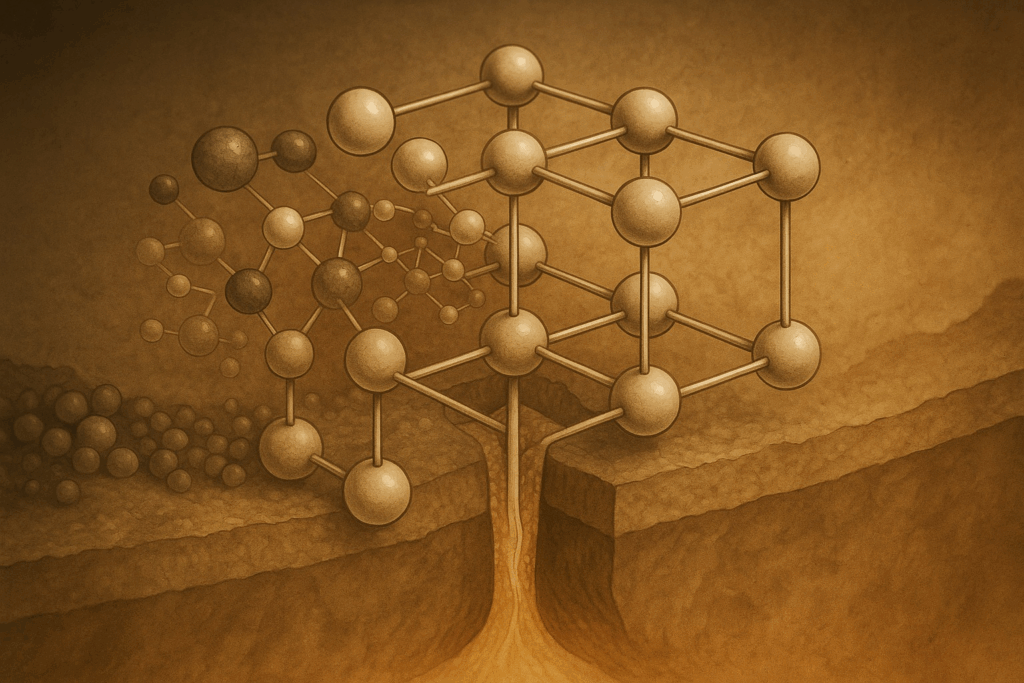
The defining feature of a diamond is its crystal structure. Each carbon atom bonds to four others in a tetrahedral arrangement. This creates an incredibly stable three-dimensional network that:
• gives diamonds their renowned hardness,
• allows for exceptional optical brilliance,
• makes them resistant to chemical reactions, and
• preserves their structure over immense geological timescales.
Small variations within this lattice — caused by trace elements or growth irregularities — contribute to differences in colour and clarity. For example, nitrogen impurities can create yellow diamonds, while boron can produce rare blue diamonds. Inclusions, internal growth lines, and distortions offer scientists valuable insight into a diamond’s exact formation environment.
Why Natural Diamond Formation Is No Longer Occurring
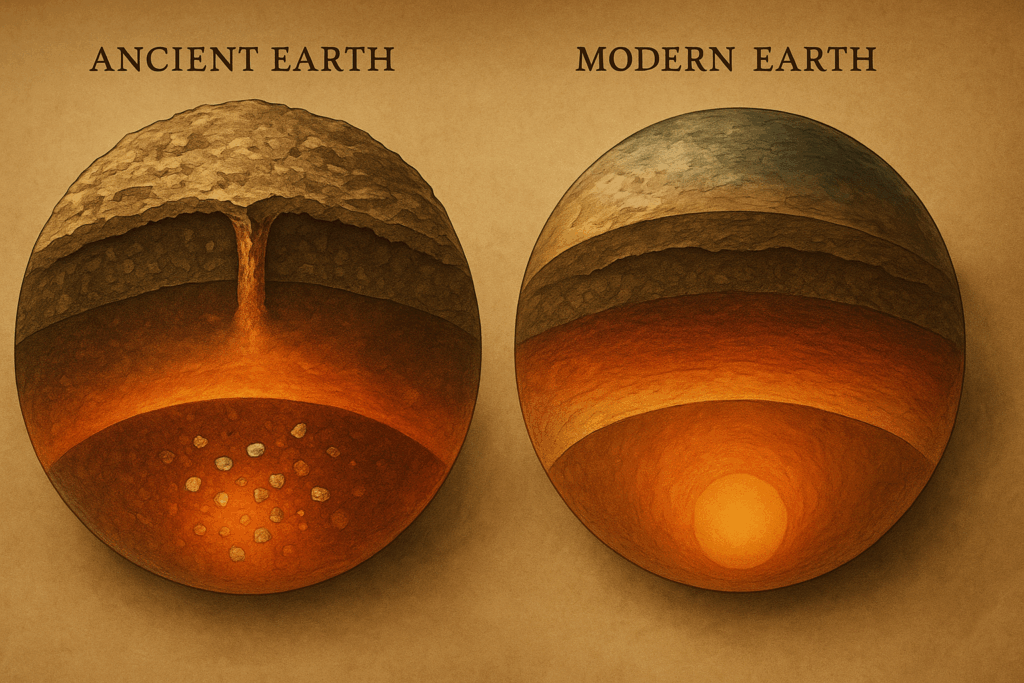
One of the most remarkable aspects of diamond science is that the geological conditions required for natural diamond formation are no longer active on Earth. The mantle today is too cool for large-scale diamond growth. The deep-source eruptions that created kimberlite pipes have not occurred for millions of years and are not expected to happen again.
This means the world’s supply of natural diamonds is finite. Every diamond unearthed today is a relic of ancient geological processes — a preserved piece of the Earth’s earliest stories.
Southern Africa: A Window into Earth’s Deep Past
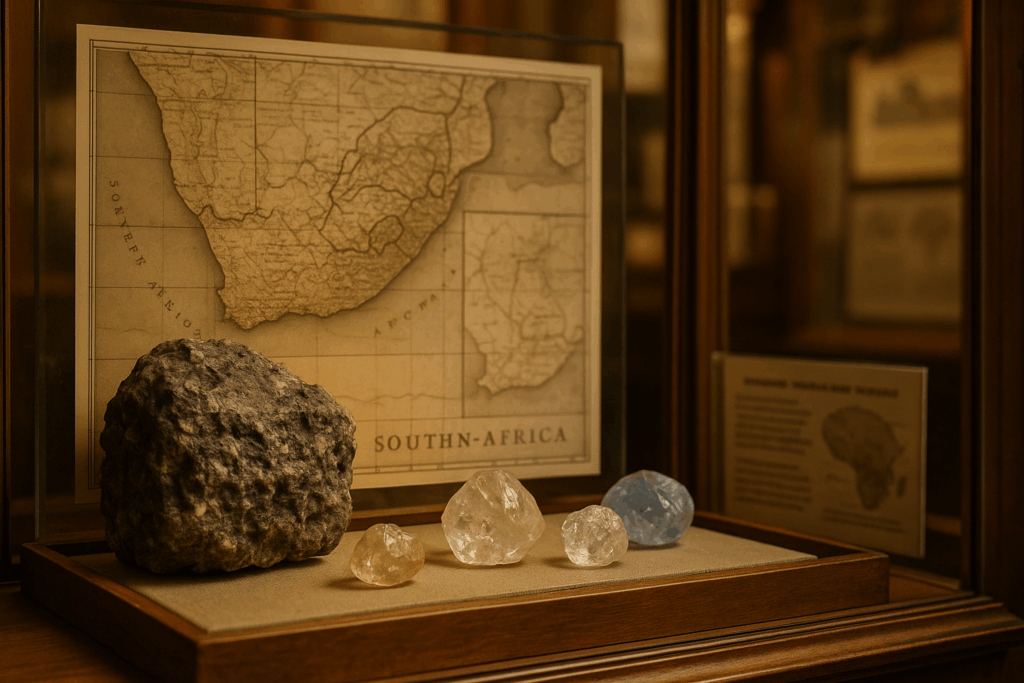
Southern Africa is globally significant in diamond research due to the quality, age, and diversity of its diamond-bearing kimberlite pipes. The region’s geology provides exceptional opportunities to study early mantle conditions and magmatic processes.
At the Museum of Gems & Jewellery, visitors can see geological specimens, rough diamonds, and curated displays that illustrate how these processes shaped South Africa’s mining history. The presence of world-renowned mines such as Kimberley and Cullinan further cements the region’s role in understanding deep-Earth science.
From Ancient Crystal to Modern Jewellery Craftsmanship

Once a diamond reaches the surface — often after billions of years underground — its transformation into a jewellery masterpiece requires precision, expertise, and respect for the natural material. Master cutters use optical modelling, laser sawing, and traditional hand-polishing techniques to reveal the gem’s natural brilliance. Each facet is aligned to enhance light performance, fire, and scintillation.
Similarly, goldsmiths at heritage ateliers in Cape Town combine classical techniques with contemporary tools to create elegant jewellery that honours the diamond’s origin. The journey from mantle crystal to finished jewel is a fusion of science, history, and artistry.
The Science of Inclusions: Nature’s Time Capsules

Inclusions within diamonds are far more than aesthetic characteristics. They are microscopic records of Earth’s deep interior. Using advanced analytical tools, researchers can determine:
• the temperature at which a diamond formed,
• the composition of ancient mantle minerals,
• fluid conditions during growth, and
• geological events that shaped continental movement.
This scientific value makes certain diamonds as important to researchers as they are to jewellers.
Conclusion
Diamonds are far more than symbols of luxury. They are geological archives, formed under exceptional conditions that no longer occur today. From carbon deep in the mantle to kimberlite eruptions that brought them to the surface, their formation reflects a story of immense natural power and ancient geological processes.
At the Museum of Gems & Jewellery, these scientific narratives come to life through curated displays, geological specimens, and expertly guided education. For those who wish to explore more about natural diamonds, their origins, and the craftsmanship behind them, the Museum offers an inspiring journey into one of Earth’s rarest treasures.