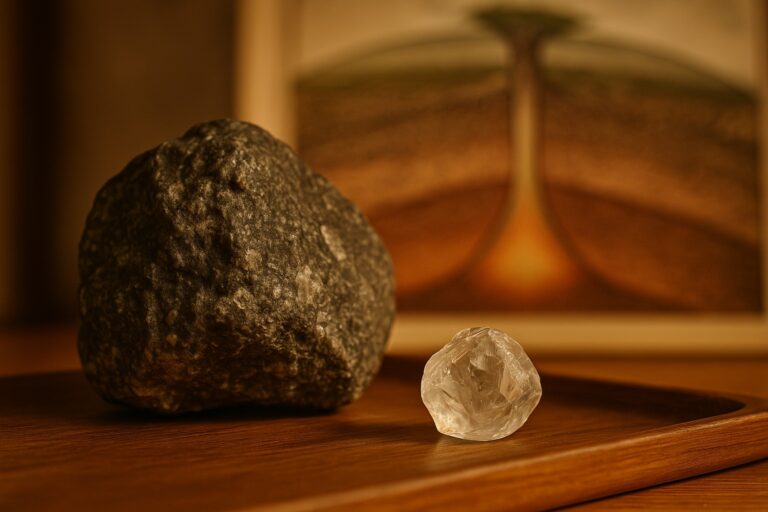
South Africa’s diamond story is one of geology, discovery, innovation, and the slow refinement of a craft that now defines much of the country’s luxury heritage. From the formation of diamonds deep within the Earth to the rise of world-famous mines and today’s master goldsmiths, the journey is layered, complex, and deeply woven into our cultural and economic history. For South Africans, and especially for those of us working within fine jewellery, this legacy shapes how we design, evaluate, and appreciate every natural diamond.
Deep Origins: How Diamonds Formed Beneath Southern Africa
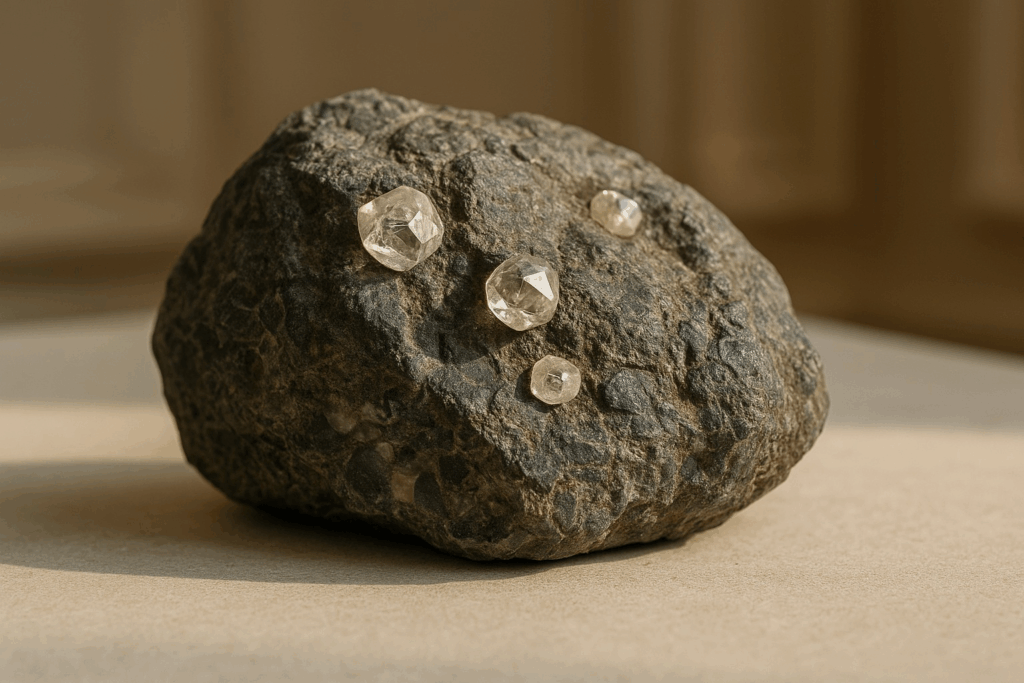
Long before the first explorer set foot near the Vaal or Orange Rivers, diamonds were already waiting beneath the Earth. Most of South Africa’s diamonds formed more than three billion years ago under intense heat and pressure, hundreds of kilometres below the surface. They travelled upwards through volcanic pipes known as kimberlite – a geological phenomenon that is rare, ancient, and globally significant.
These kimberlite pipes are what make Southern Africa one of the world’s most important diamond-producing regions. Their structure, mineral content, and distribution continue to shape geological research and mining techniques to this day. For gemmologists, the quality and diversity of diamonds from these formations offer a window into Earth’s earliest history.
The Spark of Discovery: Early Finds Along the Orange River
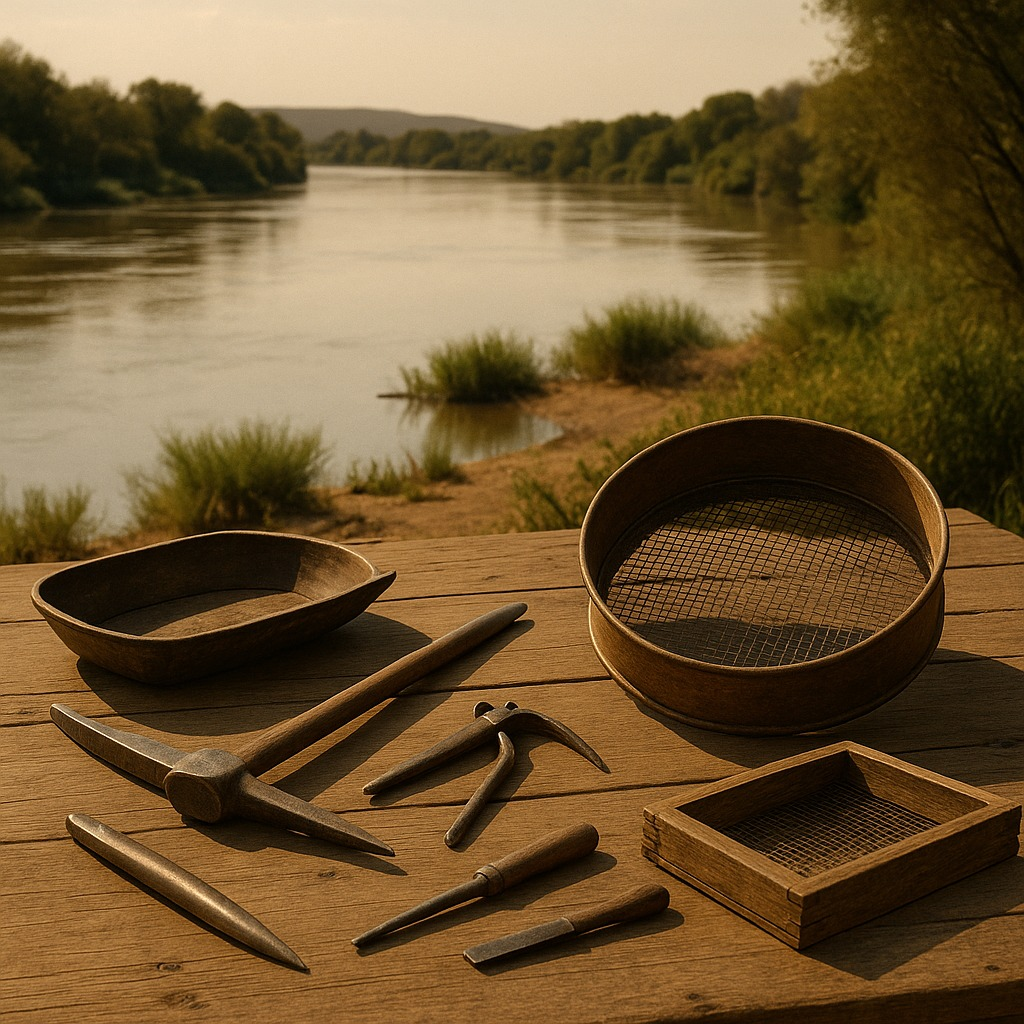
The modern diamond era began in 1867 with the discovery of the Eureka Diamond near Hopetown. A few years later, the Star of South Africa was found in the same region, drawing international attention and triggering what would soon become a global phenomenon. News travelled quickly, and the early river diggings along the Vaal and Orange Rivers brought a wave of prospectors from across the world.
These river deposits were the first indication that significant diamond sources lay deeper inland. The initial rush created new towns, new trade routes and, almost overnight, transformed parts of the Cape into booming frontier regions.
Kimberley and the Rise of the Big Hole
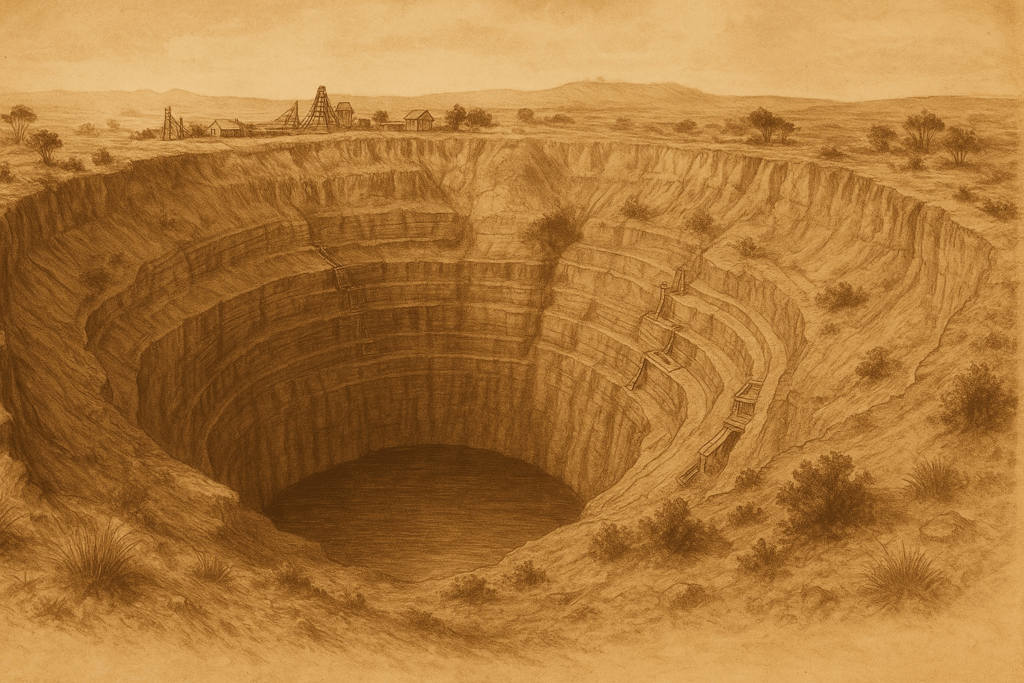
Everything changed in 1871 with the discovery of diamonds on Colesberg Kopje – today known as the Big Hole of Kimberley. The scale of the find was unprecedented. Thousands arrived to stake claims, creating one of the most intense and overcrowded mining settlements in modern history. The Kimberley diamond fields soon became the centre of global diamond production.
This period also saw the development of structured mining methods, early forms of industrialisation, and the rise of companies that would shape the international diamond market for generations. Kimberley’s legacy is not only the diamonds it produced but also the systems, expertise, and engineering innovations that emerged from its rapid evolution.
The Cullinan Diamond: A National Treasure
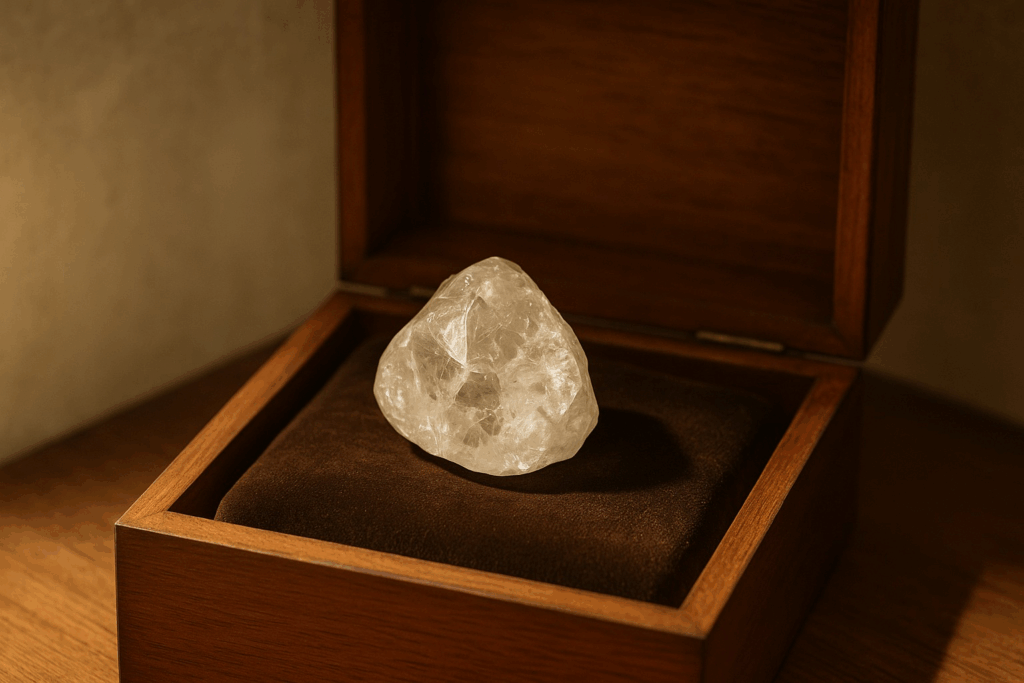
In 1905, South Africa’s diamond narrative reached another defining moment: the discovery of the Cullinan Diamond at the Premier Mine near Pretoria. At 3 106ct, it remains the largest gem-quality diamond ever found. Its size, clarity, and structure astonished experts across the world.
The cutting of the Cullinan required exceptional planning and craftsmanship. It was cleaved into several important diamonds, many of which form part of the British Crown Jewels today. The Cullinan stands not only as a geological marvel but as a testament to the precision needed to transform rough material into works of enduring cultural importance.
From Rough Extraction to Precision Craftsmanship
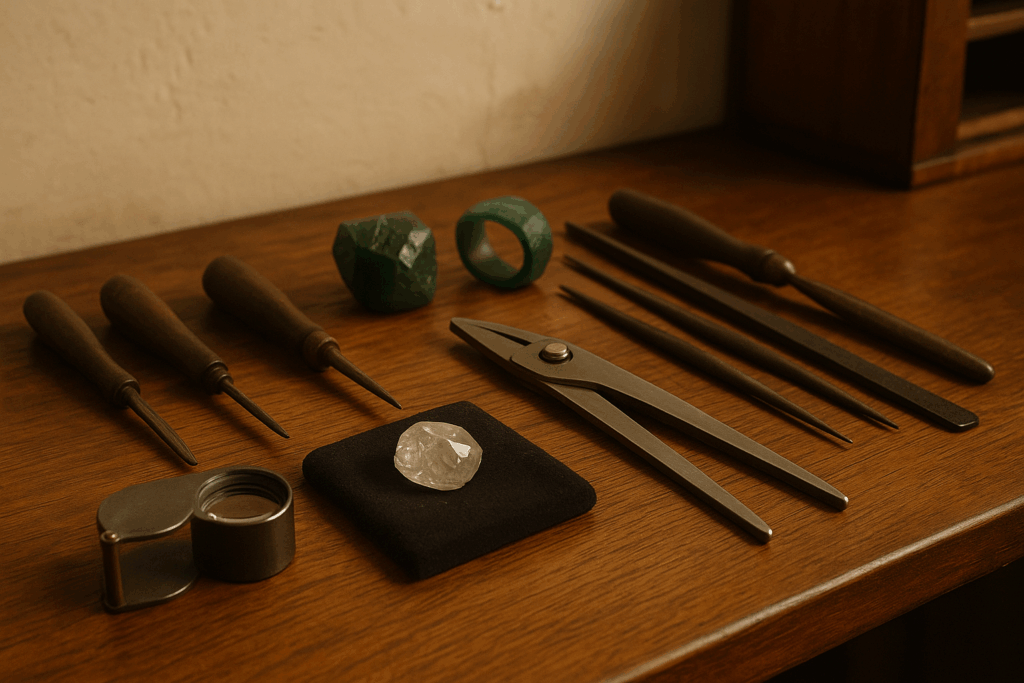
The early days of African diamond cutting were simple and labour-intensive. Most rough diamonds found in South Africa were initially exported to Europe for polishing, where cutters relied on traditional techniques, hand tools, and generational knowledge. Over time, however, craftsmanship evolved dramatically.
Today’s master cutters use advanced optical modelling, precision sawing, and laser-guided shaping to bring out the natural brilliance of each diamond. These tools allow the cutter to maximise fire, scintillation, and symmetry – qualities that define modern diamond beauty. Yet, even with technology, the principles remain rooted in tradition: a respect for the natural material and an understanding that each diamond possesses a unique internal world.
South African jewellery craftsmanship evolved alongside this shift. Workshops across the country began to develop their own styles, combining European techniques with local design influences. Modern jewellers rely on both old-world handcraft and contemporary tools to create pieces with lasting elegance.
Cape Town’s Contribution: Heritage, Artistry, and Expertise
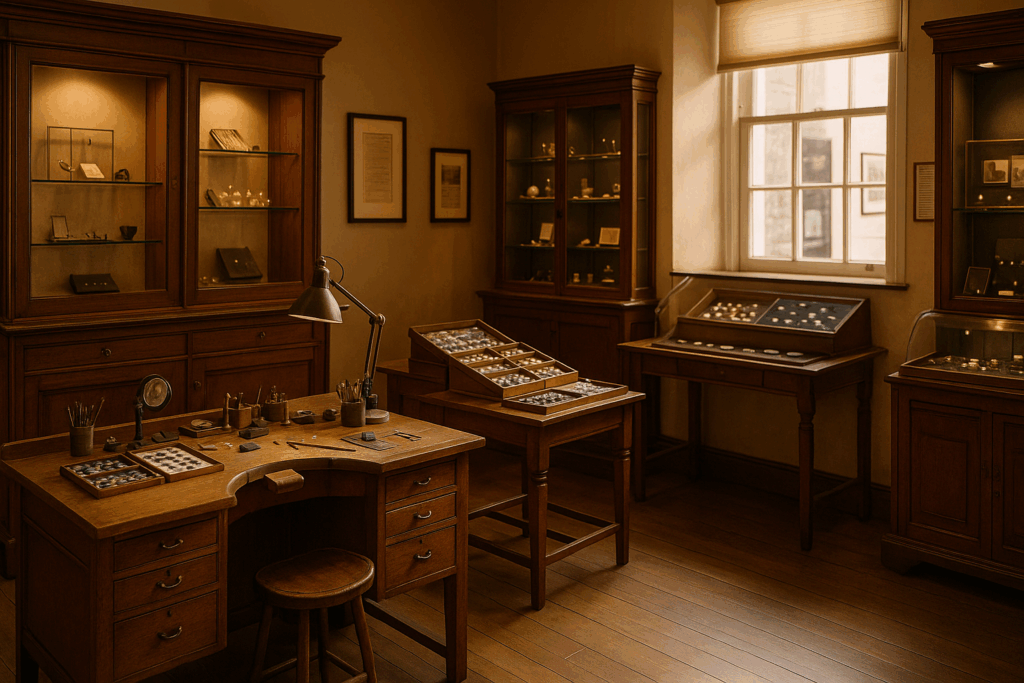
Cape Town played a special role in this evolution. As a port city and later a cultural centre, it attracted artists, goldsmiths, and gemmologists who established workshops focused on bespoke craftsmanship. Many of these artisans helped define the aesthetic of South African fine jewellery: clean lines, classical proportions, and a deep emphasis on natural diamonds.
At Huguenot House, home to Prins & Prins Diamonds, this heritage is preserved and practised daily. The building itself reflects Cape Town’s layered history, while the workshop and the Museum of Gems & Jewellery highlight the scientific and cultural significance of our country’s diamonds. Here, every natural diamond is evaluated by trained professionals, and every piece of jewellery is crafted with a blend of historical knowledge and modern technique.
The Journey from Mine to Masterpiece

A natural diamond’s journey today is far more regulated and transparent than in early mining days. Ethical sourcing, geological authentication, and independent certification ensure that each diamond carries a history that can be traced with confidence. This transparency forms the foundation of trust between jewellers and clients.
Once a diamond arrives at a master goldsmith’s bench, the focus shifts from geology to artistry. Setting techniques, metalwork, and design coherence determine the final character of the jewellery. Whether a classic solitaire or a contemporary design, craftsmanship ensures that each piece reflects both the diamond’s natural qualities and the maker’s skill.
South Africa’s Ongoing Role in World Diamond History
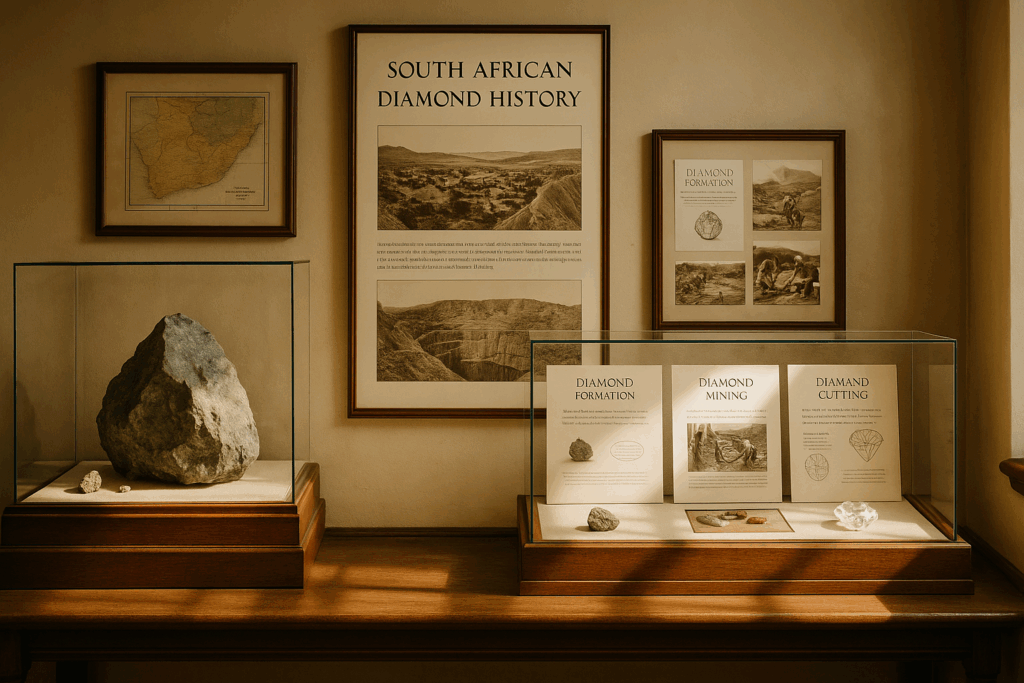
More than a century after the first discoveries, South Africa remains one of the most influential countries in diamond mining, research, and jewellery design. The combination of geological wealth, academic expertise, and artisanal heritage continues to shape how natural diamonds are understood and appreciated worldwide.
For clients visiting Cape Town, this legacy is tangible. Walking through the heritage rooms of Huguenot House or exploring the Museum of Gems & Jewellery offers a direct connection to the pioneers, geologists, and craftspeople who shaped this remarkable story.
Conclusion
South Africa’s diamond history is far more than a sequence of discoveries. It is a narrative of deep geological time, human ingenuity, and the evolution of a craft that has become central to our cultural heritage. From the volcanic origins of kimberlite to the master goldsmiths working in Cape Town today, every natural diamond carries a fragment of this long, intricate story.
For readers wishing to learn more about natural diamonds or bespoke jewellery craftsmanship, explore the Prins & Prins Diamonds website for further insight into our heritage, expert guidance, and handcrafted designs.