Across Africa, gemstones have carried meanings that reach far beyond adornment. They have symbolised identity, conveyed spiritual authority, connected communities through ancient trade routes, and shaped economies long before the rise of modern mining. Their presence in archaeological sites, sacred artefacts, royal burials, and contemporary jewellery reflects Africa’s long-standing relationship with the Earth’s mineral treasures.
South Africa, with its geological diversity and layered cultural history, plays a central role in this narrative. Today, the Museum of Gems & Jewellery preserves and presents these stories, offering visitors a deeper understanding of Africa’s gemstone heritage.
Gemstones in Early African Cultures
Symbolism in Southern African Communities
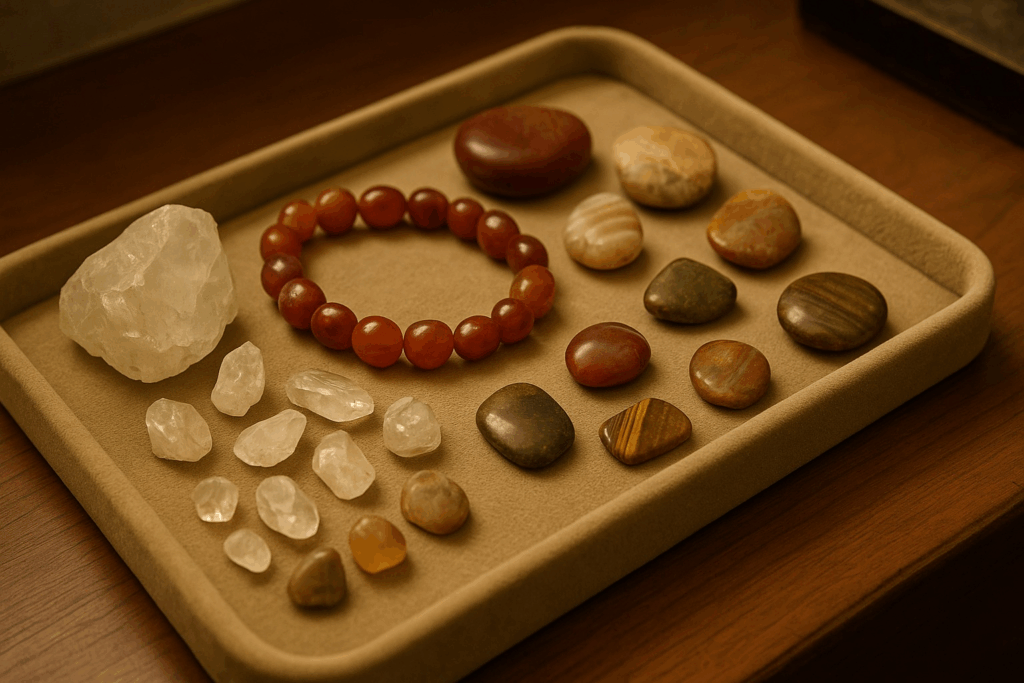
Among early Southern African cultures, gemstones were deeply embedded in ritual, healing, and identity. Archaeological sites across the region reveal widespread use of quartz crystals, prized for their clarity and reflective qualities. The Khoisan, for example, regarded quartz as spiritually significant, often linking it to ancestral communication and ritual practices.
Within Nguni cultures such as the Zulu and Xhosa, gemstones and mineral beads were used to express social role, clan identity, and cultural meaning. Agate, jasper, and malachite were shaped into beads, worn during rites of passage, or used to convey messages through colour symbolism.
Gemstones in West and Central African Traditions
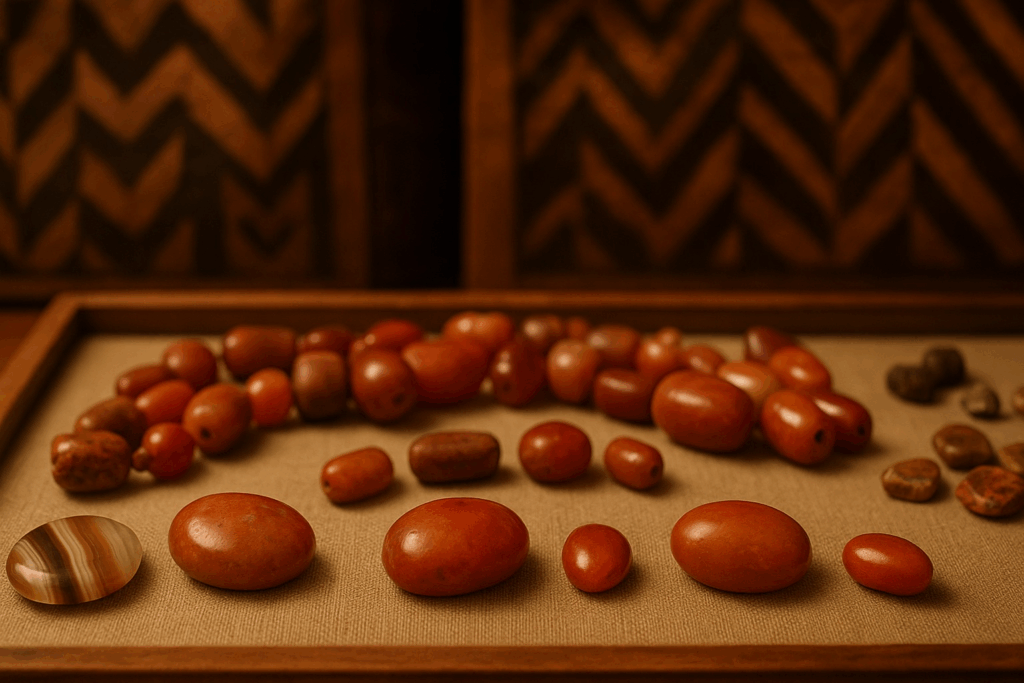
In parts of West and Central Africa, gemstones such as jasper, carnelian, and agate formed part of ceremonial objects and personal ornaments. These materials were not only decorative but believed to offer protection, vitality, and spiritual grounding.
North African Civilisations and Royal Adornment
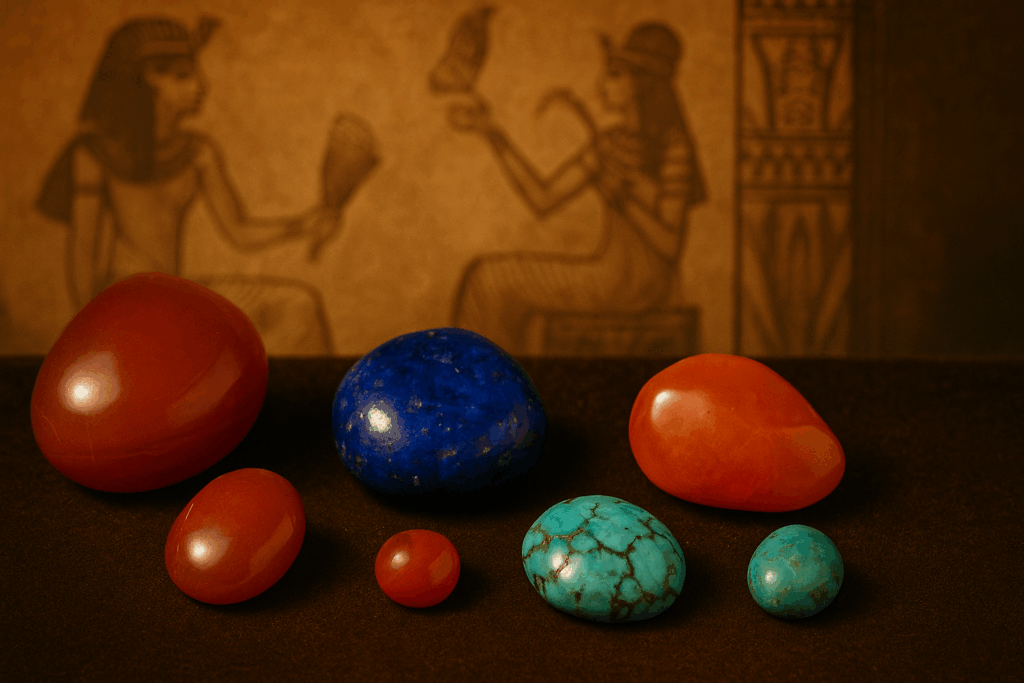
Ancient Nubia and Egypt provide some of the most well-documented uses of gemstones on the continent. Lapis lazuli, turquoise, carnelian, and amethyst were used in crowns, protective amulets, and royal regalia. These gems symbolised divine favour, kingship, and continuity between life and the afterlife.
The Role of Ancient African Trade Routes
East African Coastal Trade
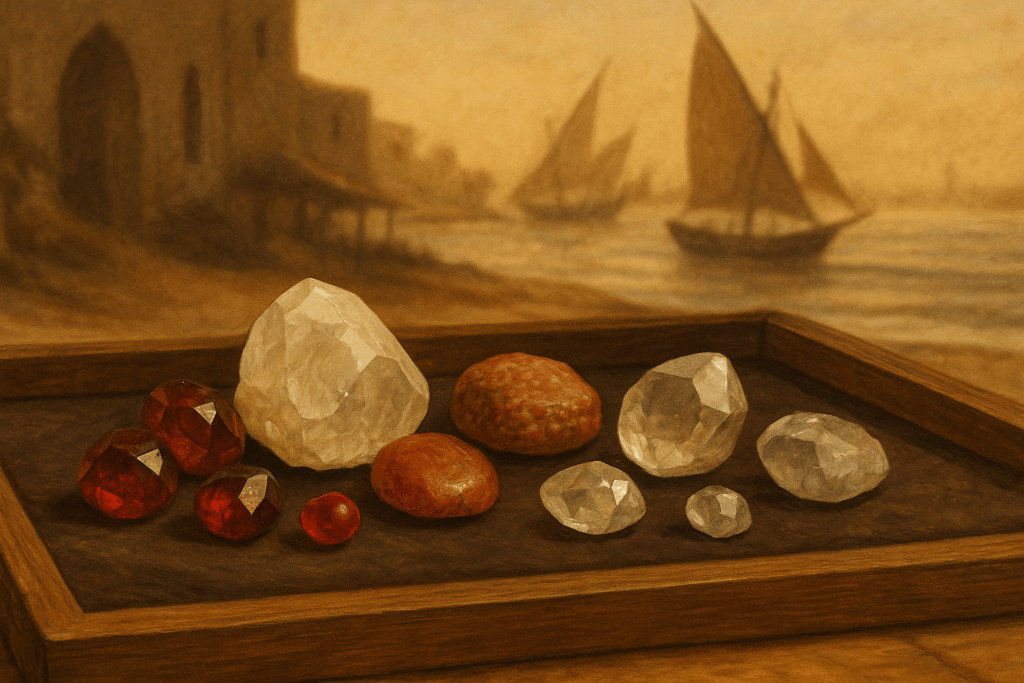
Long before European influence, gemstones formed part of active trade networks across the Swahili Coast. Cities such as Kilwa, Sofala, and Mombasa were thriving hubs where African, Arab, and Indian merchants exchanged minerals, gemstones, gold, glass beads, and textiles. Garnet, quartz, and polished minerals moved along these routes, entering both African and international jewellery traditions.
Southern African Trade Networks: Mapungubwe and Great Zimbabwe
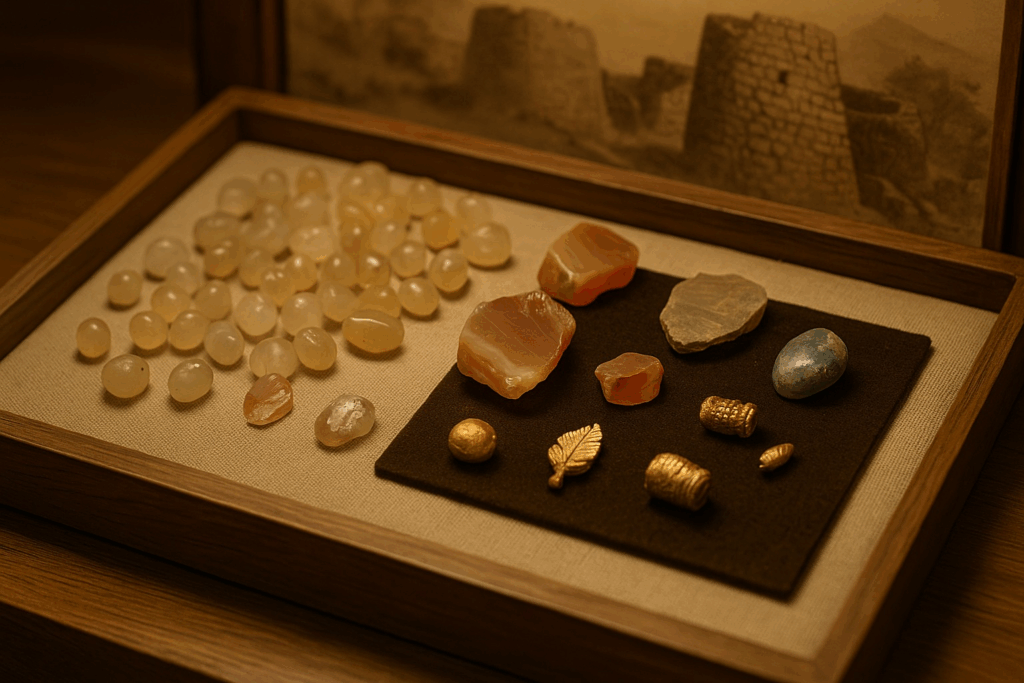
Southern Africa’s early kingdoms — particularly Mapungubwe (11th–13th century) and Great Zimbabwe (13th–15th century) — were deeply involved in gemstone and gold trade. Excavations reveal quartz beads, agate pieces, and other minerals that travelled northwards toward East Africa. These gems connected inland communities with long-distance merchants and helped shape regional economic power.
Trans-Saharan Exchange
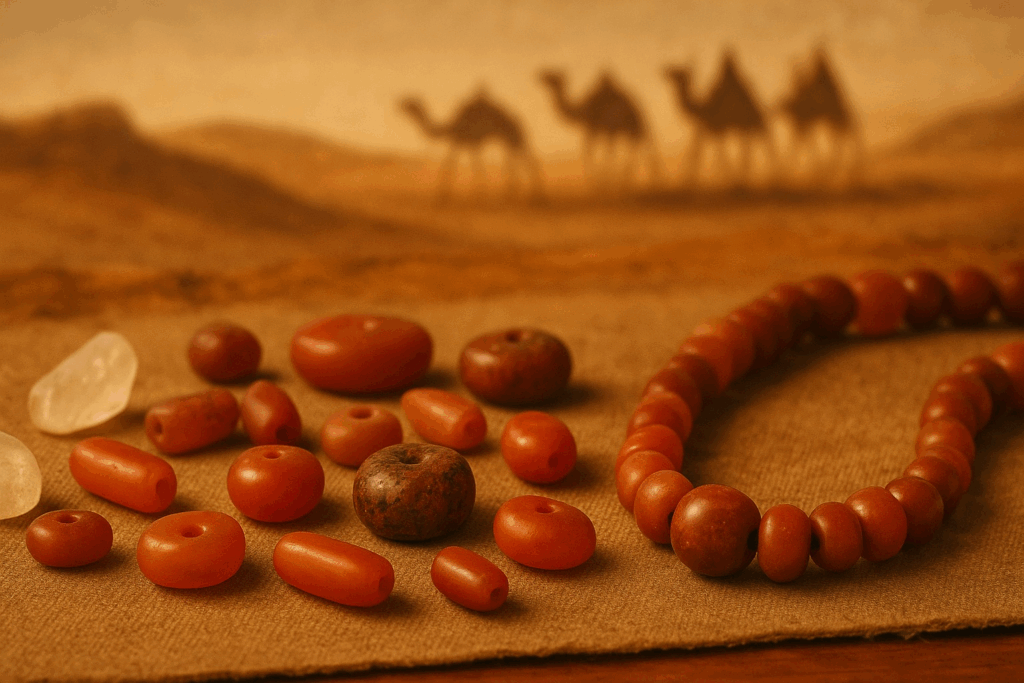
Across the Sahara, vast trading networks linked West Africa with North Africa and the Mediterranean world. Carnelian, agate, and jasper moved alongside gold, copper, and salt. These gemstones were incorporated into amulets, ceremonial jewellery, and adornment traditions among the Tuareg, Hausa, and other Sahelian communities.
Colonial Expansion and the Reshaping of African Gem Trade
From Cultural Artefact to Industrial Commodity
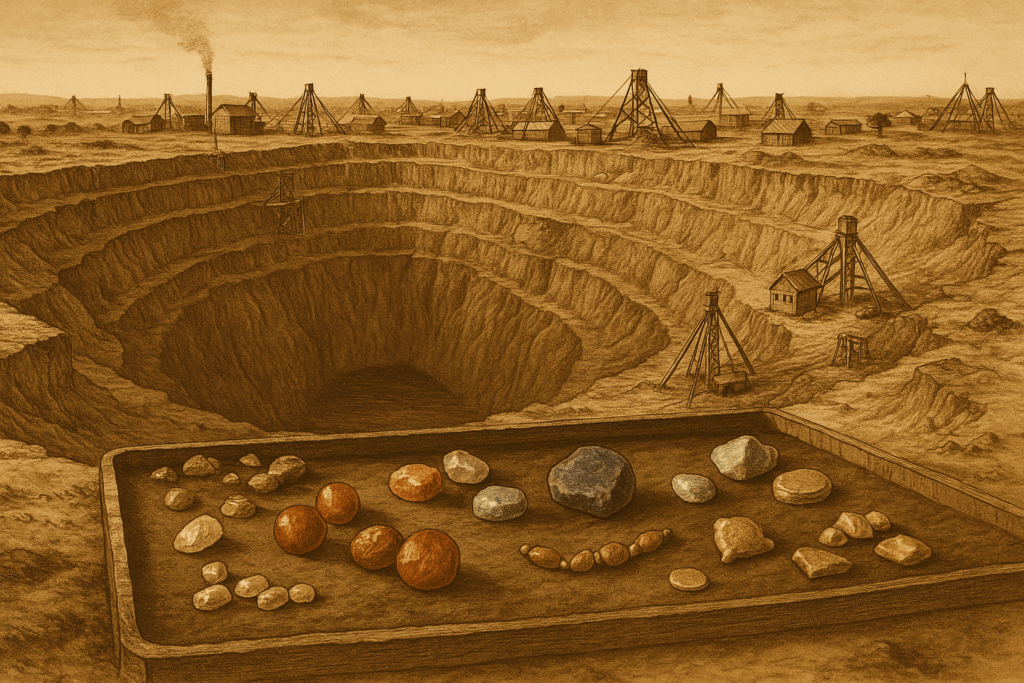
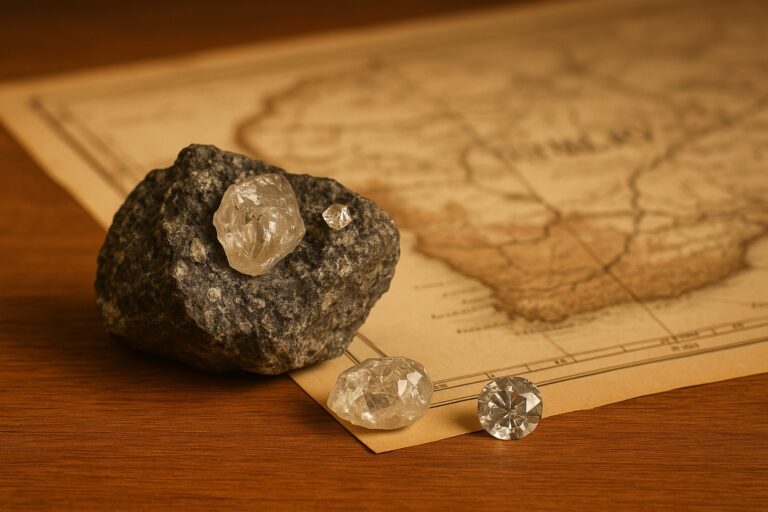
European expansion introduced large-scale mining and transformed gemstone use. Traditional cultural and symbolic meanings were overshadowed by industrial extraction. The discovery of diamonds in Kimberley in 1871 marked a turning point, reshaping global gemstone markets and shifting Africa’s gemstone economy toward international export.
Emergence of Modern Gemmology and Jewellery Craftsmanship
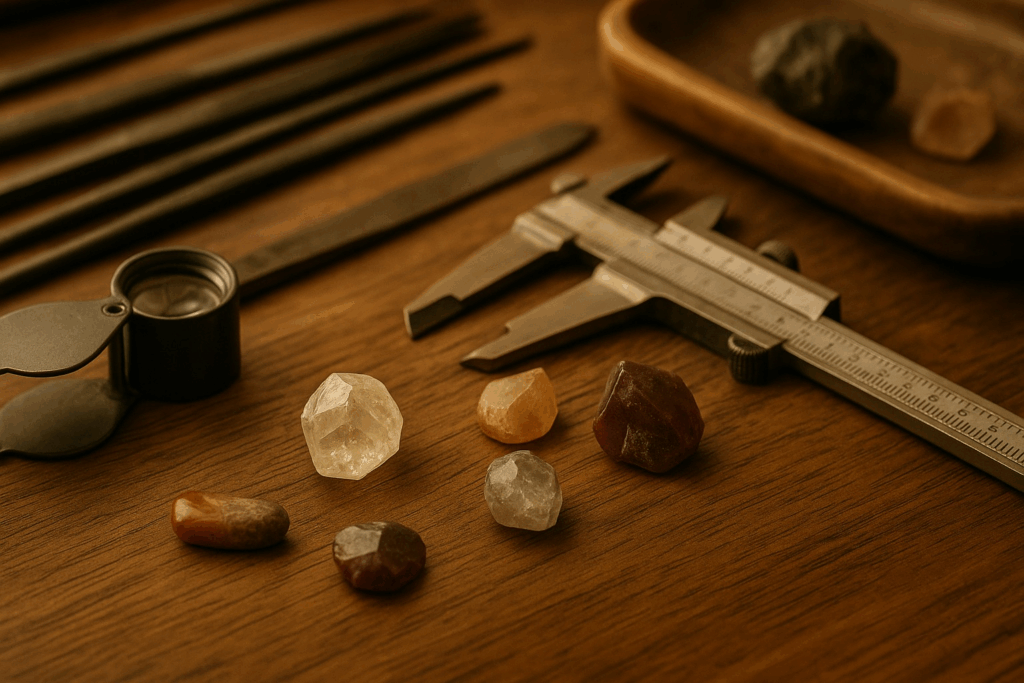
Colonial mining also led to the development of gemmological laboratories, cutting workshops, and valuation systems. Although these systems were initially established for commercial purposes, they eventually contributed to South Africa’s deep expertise in diamond grading, gemstone analysis, and jewellery design.
Gemstones in African Identity, Spirituality, and Ritual
Symbolic and Spiritual Functions
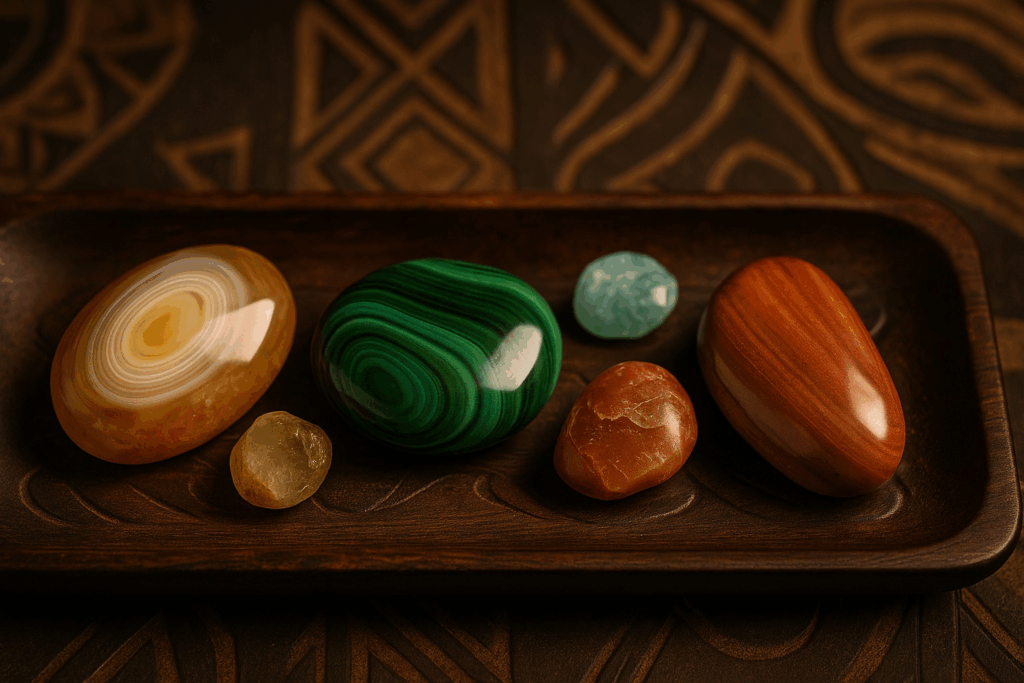
Across Africa, gemstones have long been associated with protection, ancestor connection, and emotional or spiritual wellbeing. In Zulu and Xhosa traditions, carved agate or polished mineral beads communicated identity and carried symbolic meaning. In West Africa, carnelian and jasper were used in amulets believed to provide protection during travel or ritual activities.
Cultural Continuity Through Adornment
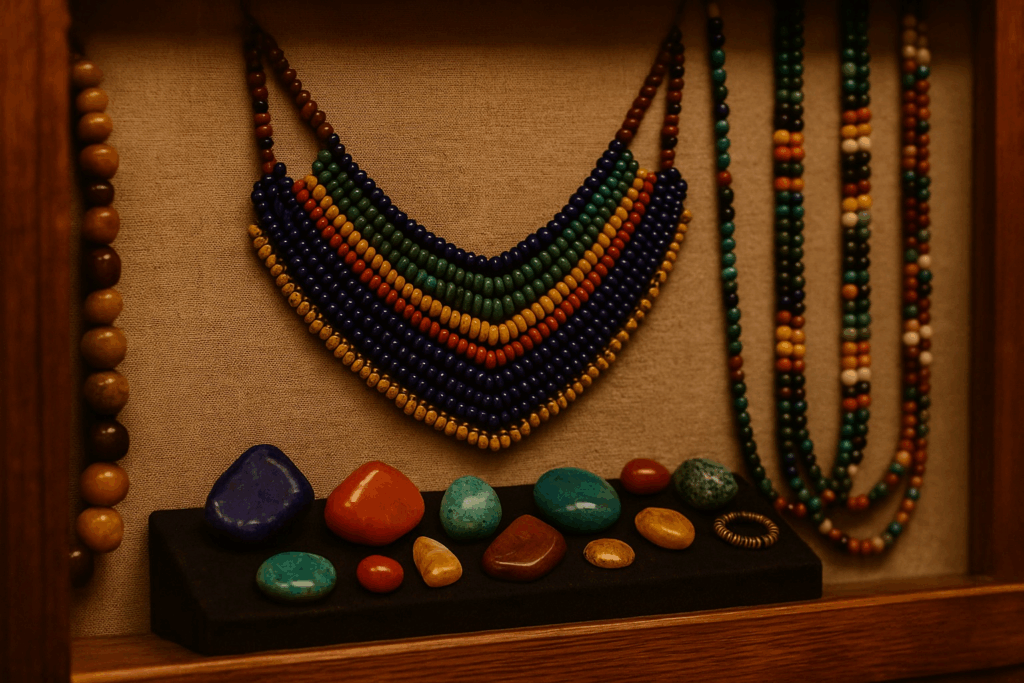
While materials have evolved over centuries, the symbolic language remains intact. Modern beadwork in East Africa, for example, draws on traditions originally rooted in natural gemstones, even when contemporary materials differ.
Southern Africa’s Geological Wealth
A Region Rich in Mineral Diversity
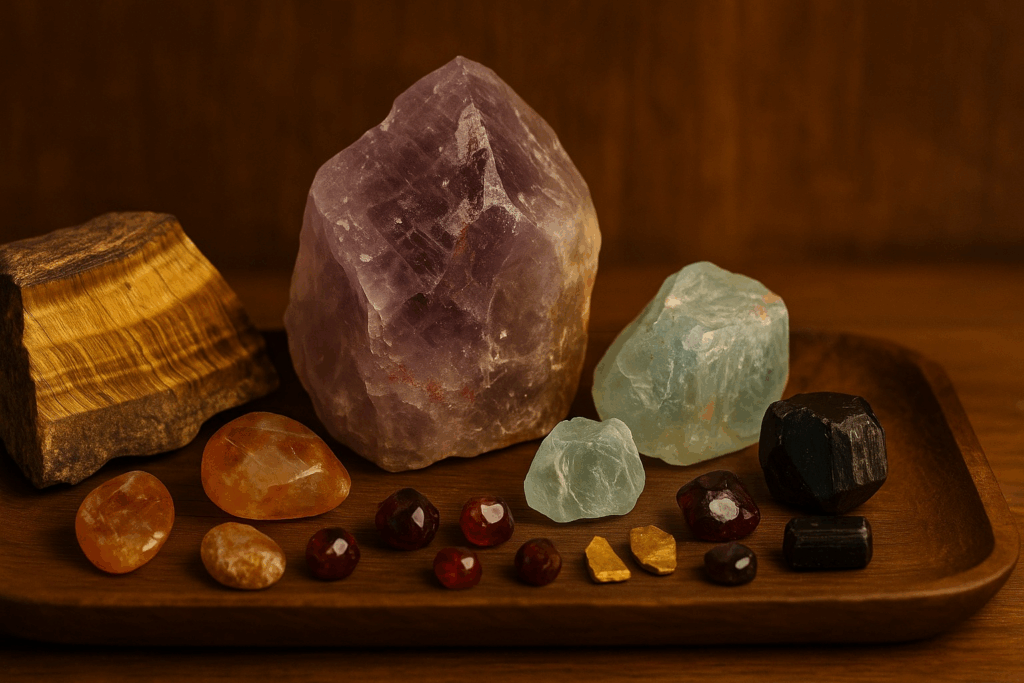
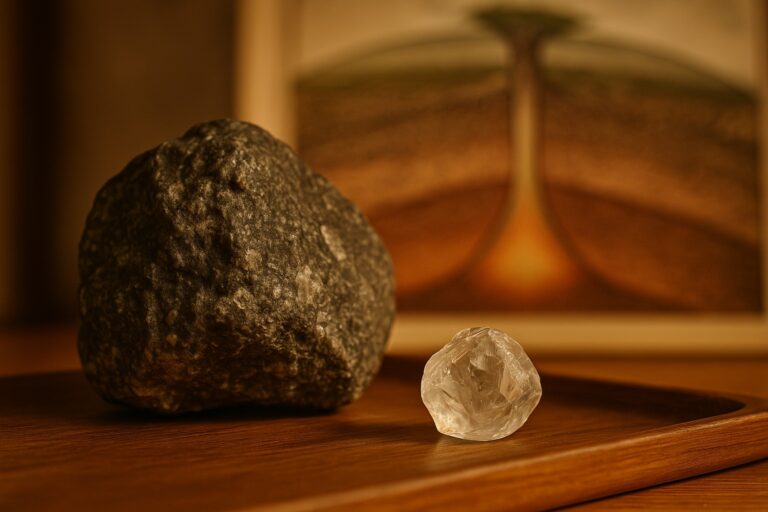
Southern Africa is one of Earth’s most geologically diverse regions, hosting deposits of diamonds, garnet, aquamarine, tourmaline, amethyst, tiger’s eye, and many other gems. Its ancient geological formations — including kimberlite pipes, pegmatites, and metamorphic belts — have shaped both scientific research and the gemstone industry.
Key Gem-Producing Regions
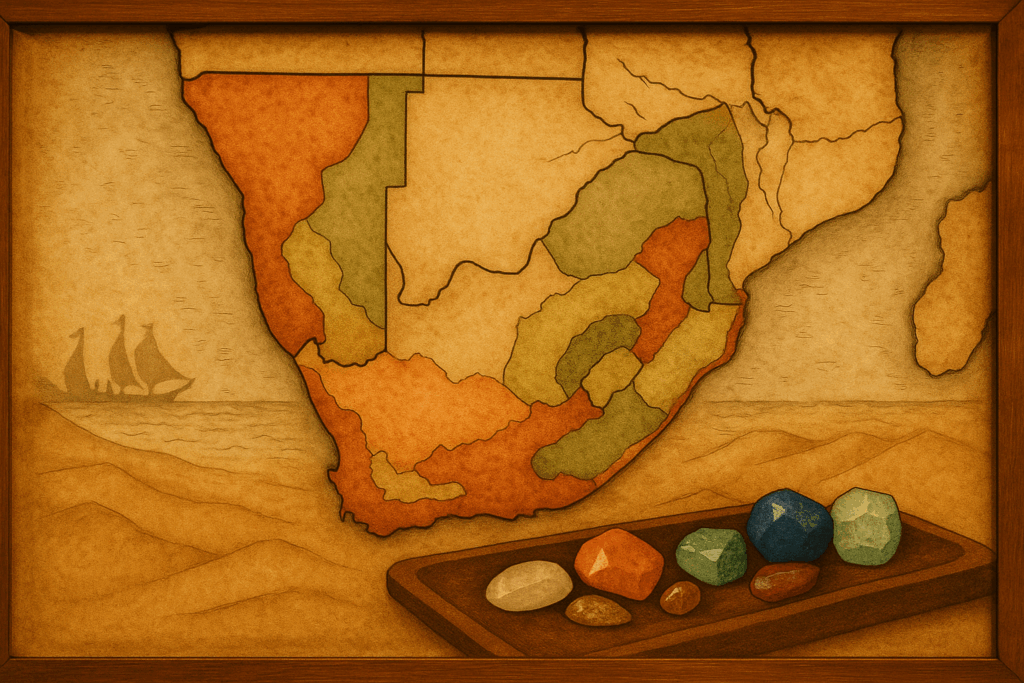
• Northern Cape: globally known for tiger’s eye
• Limpopo and Mpumalanga: notable amethyst and quartz deposits
• Namibia and Mozambique: world-class aquamarine and tourmaline
This geological abundance has positioned Southern Africa as a significant contributor to global gemstone understanding, mining, and artistry.
Modern Jewellery Craftsmanship in South Africa
A Blend of Tradition and Contemporary Technique
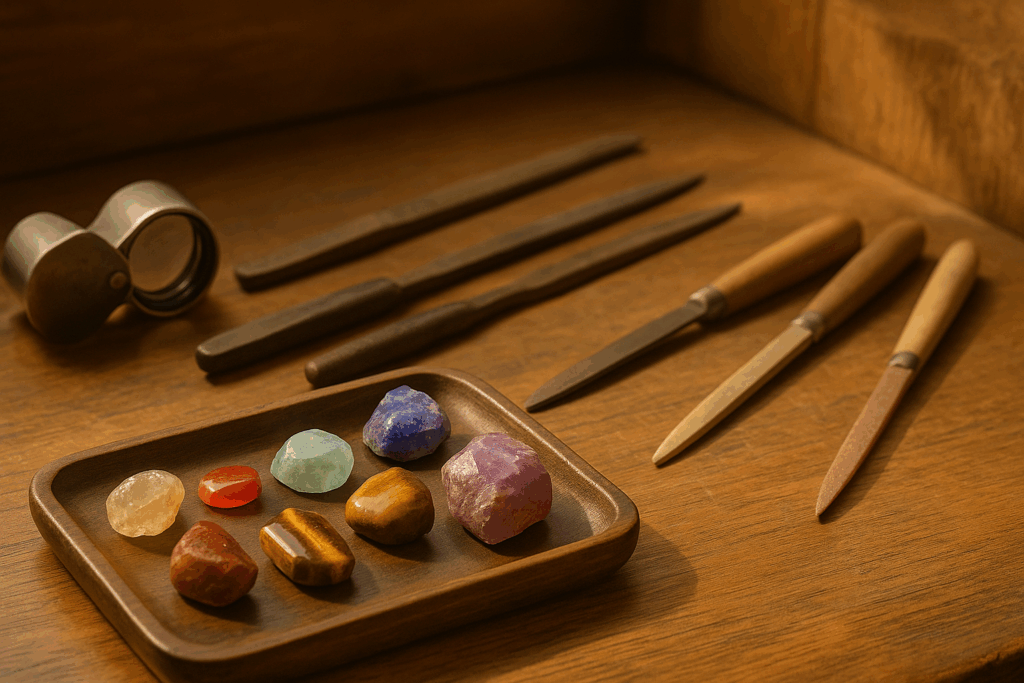
Today’s South African jewellers combine heritage influences with advanced tools and gemmological expertise. Goldsmiths integrate gemstones into designs that reflect local culture while meeting global standards of craftsmanship.
Cape Town’s Heritage Workshops
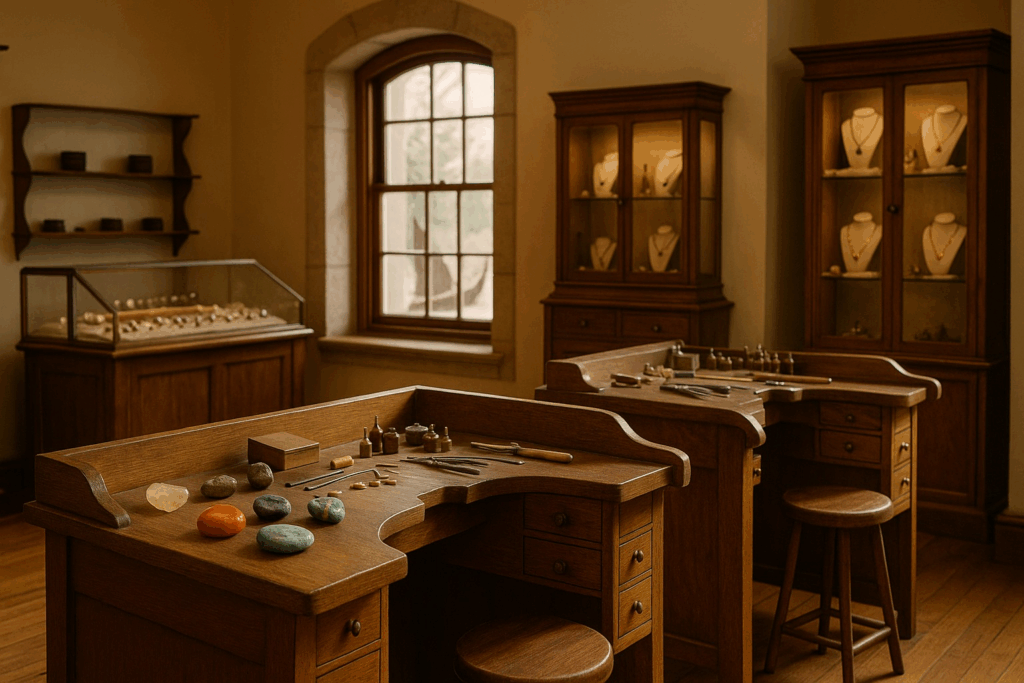
Cape Town maintains a strong tradition of bespoke jewellery creation. At Huguenot House — home to Prins & Prins Diamonds and the Museum of Gems & Jewellery — modern craftsmanship is deeply rooted in historical knowledge and scientific accuracy.
The Museum of Gems & Jewellery: Preserving a Continental Legacy
A Centre for Education, Culture, and Scientific Understanding
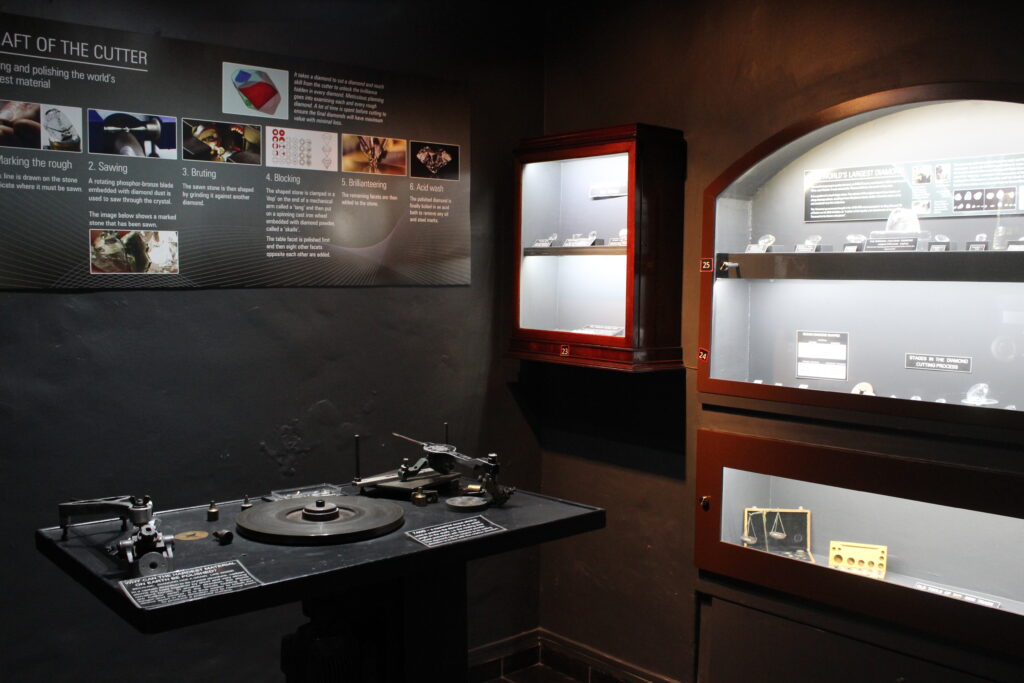
The Museum of Gems & Jewellery showcases Africa’s gemstone history through geological specimens, historic artefacts, and educational exhibits. Visitors encounter everything from ancient quartz pieces to polished gemstones and mineral specimens from major African deposits.
Connecting Past and Present
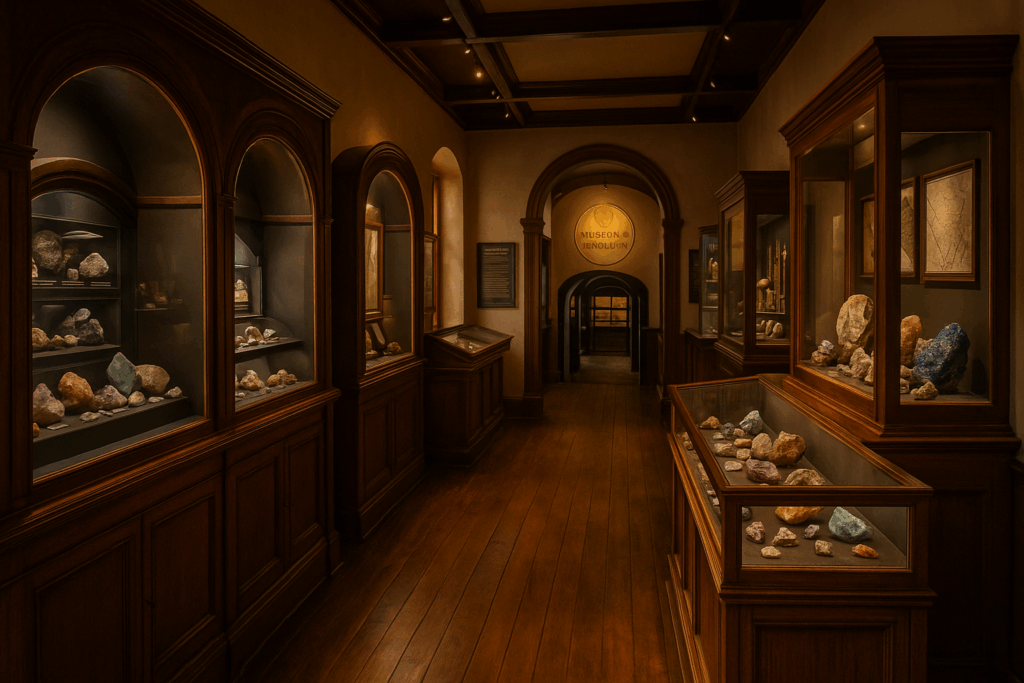
By bridging cultural history, geology, and contemporary craftsmanship, the Museum helps preserve Africa’s gemstone legacy for future generations. It offers an educational environment that highlights both the scientific and cultural significance of Africa’s mineral treasures.
Conclusion
Gemstones have shaped African identity, trade, culture, and craftsmanship for millennia. They are symbols of ancestry, markers of status, and objects of spiritual significance. Their movement across trade routes reveals deep intercontinental connections, while their presence in archaeological sites reflects Africa’s creative and spiritual heritage.
South Africa’s geological wealth, combined with its rich cultural tapestry, places it at the forefront of African gemstone history. For those wishing to explore this extraordinary story further, the Museum of Gems & Jewellery offers an engaging and authoritative journey into the continent’s mineral heritage, from ancient cultural artefacts to modern fine jewellery craftsmanship.